
# San Diego SEO: What Your Competitors Know That You Don't
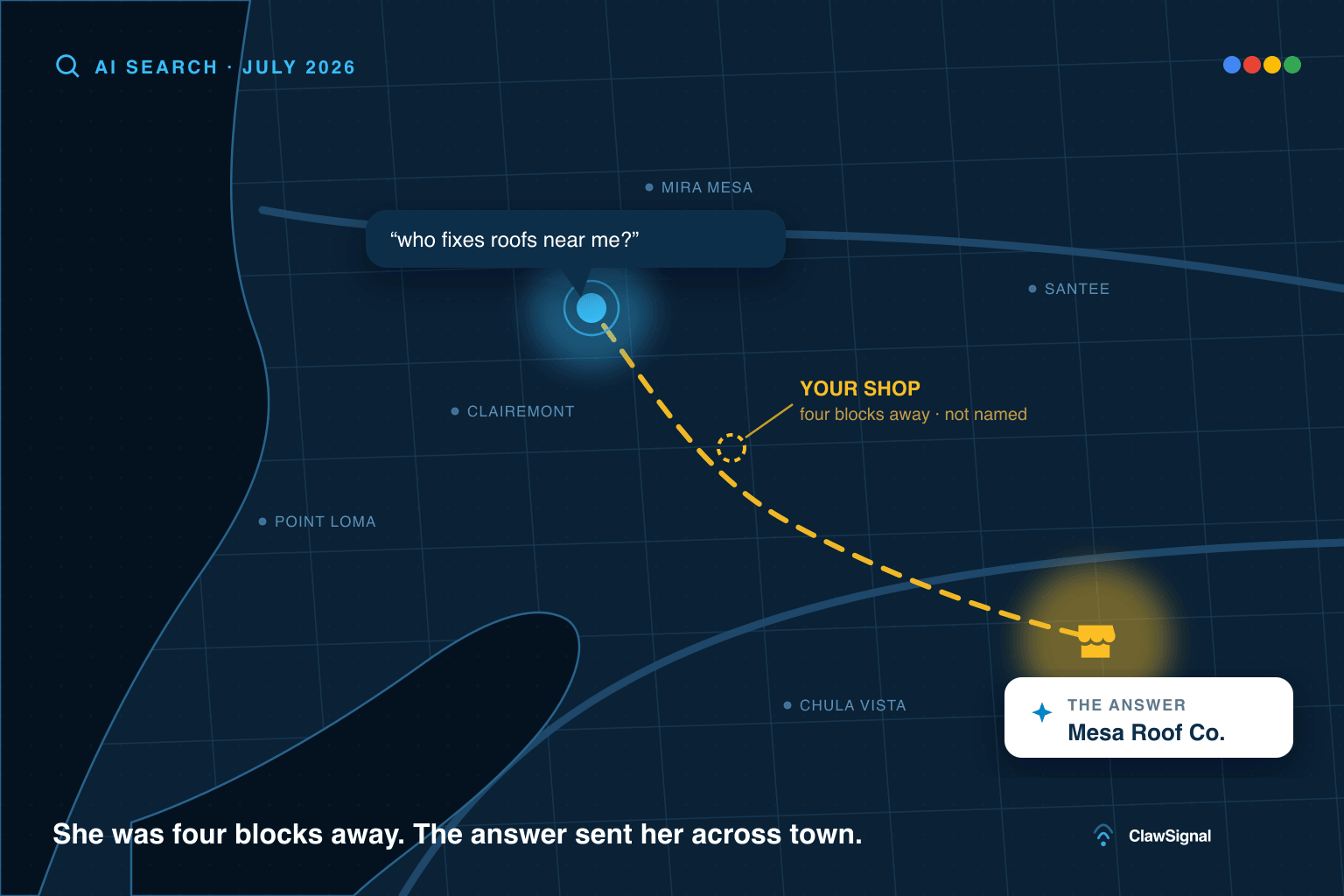
Your competitor ranks #1 on Google. You rank nowhere. They're getting the calls, the foot traffic, the revenue. You're getting nothing.
It's not luck. It's not because they've been around longer. It's because they know something about local SEO that you don't—or more likely, they're doing things you know about but haven't done.
This post breaks down exactly what top-ranking San Diego businesses do differently. No gimmicks. No shortcuts. Just the systematic work that separates page one from page invisible.
They Claimed the Map Before You Did
The most successful San Diego businesses on Google didn't wait for customers to find them. They claimed their Google Business Profile early, optimized it completely, and started building their digital presence while competitors were still figuring out how the internet works.
Here's what "completely optimized" looks like for the businesses dominating San Diego search:
- Every field filled. Business description, services, products, attributes, hours (including special hours for every holiday), service areas—nothing left blank.
- 200+ photos. Not stock photos. Real photos of their business, team, products, and location. Updated monthly.
- Weekly Google Posts. Promotions, events, tips, behind-the-scenes content. They treat their GBP like a social media channel.
- Active Q&A section. They seeded common questions with their own answers and respond to new questions within hours.
The businesses you're losing to didn't do this overnight. They built it over months and years. But here's the good news: you can catch up faster than they built it, because you now know exactly what the target looks like. If you want to verify the fundamentals yourself, Google publishes its own local-ranking guidance explaining what actually influences where you show up.
They Obsess Over Reviews (and You Don't)
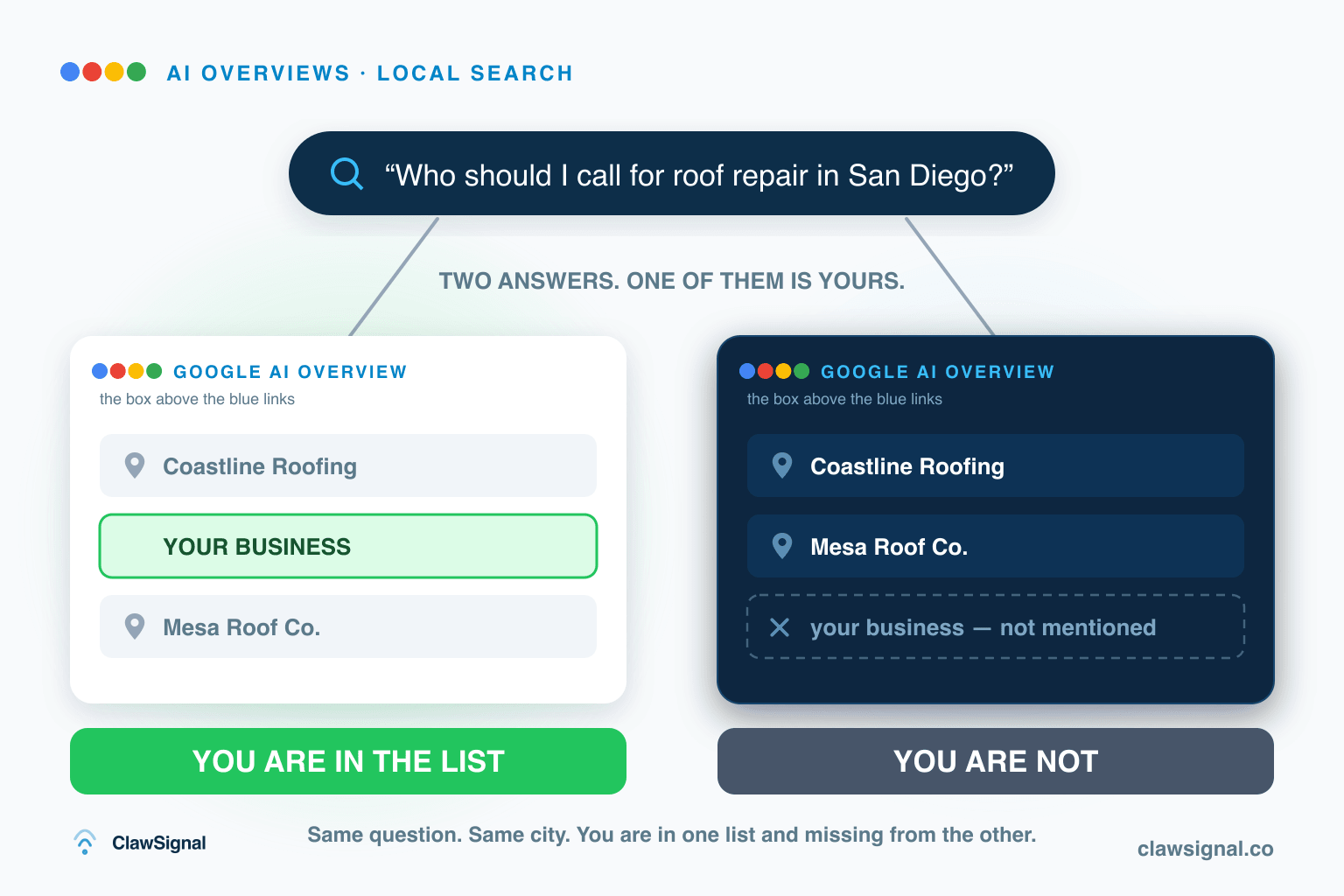
Look at the Google local pack for any competitive search in San Diego. Count the reviews on the top three results. Now count yours.
That gap is probably the single biggest reason they rank and you don't.
What Top San Diego Businesses Do With Reviews
- They ask every customer. Not some customers. Not when they remember. Every single one. They have a system—a follow-up text, a card at checkout, a trained staff script.
- They respond to every review within 24 hours. Positive reviews get personalized thank-yous. Negative reviews get calm, professional responses that move the conversation offline.
- They monitor review velocity. They know that 10 reviews per month consistently beats 100 reviews once then nothing for a year.
- They use reviews as marketing. Top reviews get highlighted on their website, shared on social media, and referenced in their Google Posts.
A San Diego HVAC company with 400 reviews and a 4.8 rating is virtually untouchable in local search. That's not because Google is unfair—it's because 400 real customers vouching for you is powerful evidence of quality.
They Build Content You Haven't Thought Of
Your competitor's website isn't just a digital business card. It's a content machine designed to capture search traffic from every angle.
Location Pages
The best San Diego businesses create dedicated pages for every neighborhood they serve:
- "Roof Repair in Mission Hills"
- "Family Dentist in Carmel Valley"
- "Auto Detail in Coronado"
Each page has unique content with neighborhood-specific details, not just the same template with different city names. Google can tell the difference, and so can customers.
Service Pages
Instead of listing all services on one page, top competitors create individual pages for each service:
- "Tankless Water Heater Installation San Diego"
- "Commercial HVAC Maintenance San Diego"
- "Deep Cleaning Services San Diego"
Each page targets a specific keyword and provides detailed, useful information about that service. This strategy captures long-tail searches that generic competitors miss entirely.
Blog Content That Answers Real Questions
The top-ranking San Diego businesses publish blog content regularly. Not fluff—answers to questions their customers actually search for:
- "How much does it cost to replace a roof in San Diego?"
- "Best time of year to paint a house exterior in San Diego's climate"
- "How to choose a wedding venue in San Diego (2026 guide)"
This content does three things: it captures search traffic, it builds topical authority with Google, and it demonstrates expertise to potential customers.
Here's how the three content types stack up against each other:
| Content Type | What It Targets | How It Wins |
|---|---|---|
| Location Pages | Neighborhood-level searches | Unique neighborhood-specific details, not a duplicated template |
| Service Pages | Specific service keywords | Detailed info that captures long-tail searches generic competitors miss |
| Blog Content | Real customer questions | Captures traffic, builds topical authority, and demonstrates expertise |
They Have Links You Don't
Backlinks—other websites linking to yours—remain a major ranking factor. Top San Diego businesses earn local links that their competitors don't bother pursuing.
Where They Get Links
- San Diego media. Local news coverage, features in San Diego Magazine, SD Voyager interviews, KUSI segments. Getting featured requires pitching, but local media is always looking for San Diego business stories.
- Chamber of Commerce and business associations. San Diego Regional Chamber, neighborhood associations (North Park Main Street, Ocean Beach MainStreet Association, Hillcrest Business Association), and industry groups all link to member businesses.
- Sponsorships. Sponsoring local events, Little League teams, school programs, and community organizations earns links from their websites.
- Partner businesses. Cross-promotion with complementary businesses. A wedding venue links to their preferred caterer, photographer, and florist. A real estate agent links to their preferred inspector, mover, and handyman.
- Local blogs and influencers. San Diego food bloggers, lifestyle influencers, and community websites are always featuring local businesses.
Your competitors have been building these relationships for years. You can accelerate by being intentional about it starting now.
They Understand the Technical Side
The businesses ranking #1 in San Diego don't all have fancy websites. But their websites work properly on a technical level.
What They Get Right
- Mobile-first design. Their sites load fast and work perfectly on phones. Over 60% of local searches happen on mobile.
- Page speed under 3 seconds. They don't have bloated pages with huge images and unnecessary scripts.
- SSL certificates. HTTPS everywhere. No security warnings.
- Schema markup. LocalBusiness structured data that tells Google exactly what their business is, where it's located, and what it offers.
- Clean URL structure. /services/plumbing-san-diego/ instead of /page?id=347.
- Internal linking. Service pages link to location pages. Blog posts link to service pages. Everything is connected.
Most of these are one-time fixes. You implement them once and they keep working for you forever.
They Track Everything (and Adjust)
The businesses dominating San Diego search don't guess what's working. They measure it.
What They Track
- Keyword rankings. They know exactly where they rank for their target keywords and track changes weekly.
- GBP performance. Views, searches, clicks, calls, direction requests—all monitored monthly.
- Website traffic sources. They know what percentage of traffic comes from organic search, Google Maps, social media, and direct visits.
- Conversion rates. What percentage of website visitors call? Fill out a form? Make a purchase?
- Competitor movements. When a competitor gets a surge of reviews, changes their categories, or publishes new content, they notice.
This data-driven approach means they double down on what works and stop wasting time on what doesn't. They're not guessing—they're optimizing.
Tools like ClawSignal give you this exact visibility: keyword tracking, GBP monitoring, citation audits, and competitor analysis in one dashboard. Instead of manually checking ten different platforms, you see everything that matters in one place.
They Play the Long Game
Here's the uncomfortable truth: the businesses ranking #1 in San Diego didn't get there last month. They've been consistently working on their local SEO for months or years.
But "long game" doesn't mean "slow game." It means:
- Starting now. Every day you wait is a day your competitors are building their lead.
- Being consistent. Weekly Google Posts, monthly photo uploads, regular review generation, quarterly content publishing.
- Not chasing shortcuts. No bought reviews, no keyword-stuffed business names, no fake listings. These tactics get you suspended.
- Adapting to changes. Google updates its algorithm regularly. The businesses that rank consistently are the ones that stay current.
Your competitors started before you. That's fine. You have the advantage of knowing exactly what works and being able to implement it deliberately instead of figuring it out through trial and error.
Your Competitive Analysis Action Plan
Stop guessing. Start studying. Here's how to analyze your San Diego competitors in 30 minutes:
- Search your top 3 keywords. Note who appears in the local pack for each.
- Count their reviews. That's your target number.
- Read their reviews. What do customers praise? What do they complain about? These are opportunities for you.
- Visit their website. Count their service pages, location pages, and blog posts. You need more than they have.
- Check their GBP. How many photos? How often do they post? What categories do they use?
- Google their business name + "featured" or "interview." Find what local media coverage they have. Target the same outlets.
Or skip the manual work: get your free Ranking Roadmap at [clawsignal.co](https://clawsignal.co). We'll analyze your local presence, compare you to your top competitors, and show you exactly where the gaps are and how to close them.
Once you have the raw numbers, the next step is turning them into a prioritized plan. Not every gap is worth closing first. Rank each finding by two questions: how big is the gap, and how much effort does it take to close? A competitor with 300 more reviews than you represents a large gap, but review generation is a slow, ongoing effort. A missing set of neighborhood service pages might be a smaller gap you can close in a weekend. Attack the high-impact, low-effort items first so you see movement while the longer plays build in the background.
It also helps to document what you find in a simple spreadsheet you can revisit. For each competitor, log their review count, review rating, number of service and location pages, posting frequency, primary and secondary GBP categories, and any media coverage you turn up. Rerun the same audit every 30 to 60 days. The changes between snapshots tell you more than any single snapshot ever will—a competitor who suddenly adds twenty reviews in a month or spins up a batch of new location pages is signaling where they plan to compete next, and gives you time to respond before they pull ahead.
One detail that's easy to overlook: check which GBP categories your top competitors use, not just their primary category but their secondary ones too. Categories are one of the strongest signals Google uses to decide which searches you're eligible to appear for. If three of the businesses outranking you all share a secondary category you haven't selected, that's a concrete, free change you can make the same day. The same goes for the services and attributes they've listed—these often reveal search terms they're targeting that you haven't considered.
Finally, don't limit your review reading to the star ratings. The text of a competitor's reviews is a free market-research report. When customers repeatedly praise the same thing, that's the standard you have to meet. When they repeatedly complain about slow response times, confusing pricing, or a rude front desk, those complaints are the exact gaps you can fill and then feature in your own marketing. Reading fifty of a competitor's reviews will teach you more about what your shared customers actually want than any keyword tool.
The Gap Is Closable
Your competitors aren't geniuses. They're not lucky. They just started doing the right things before you did.
The ranking factors for local SEO in San Diego are known. The playbook is clear. The businesses that execute it win. The ones that don't, lose.
You now know what your competitors know. The only question is whether you'll do something about it.
Ready to see exactly where you stand? Get your free Ranking Roadmap at clawsignal.co and find out what it takes to outrank your competition.