Every piece of content passes a 10-point gate before it ships
Volume without quality is how sites earn Google’s indifference. Every blog post and profile update we produce is scored against a hard standard before publishing — and the scores are kept.
Free AI-visibility scan · No credit card · Cancel anytime
Set up in 3 simple steps
Every draft gets scored
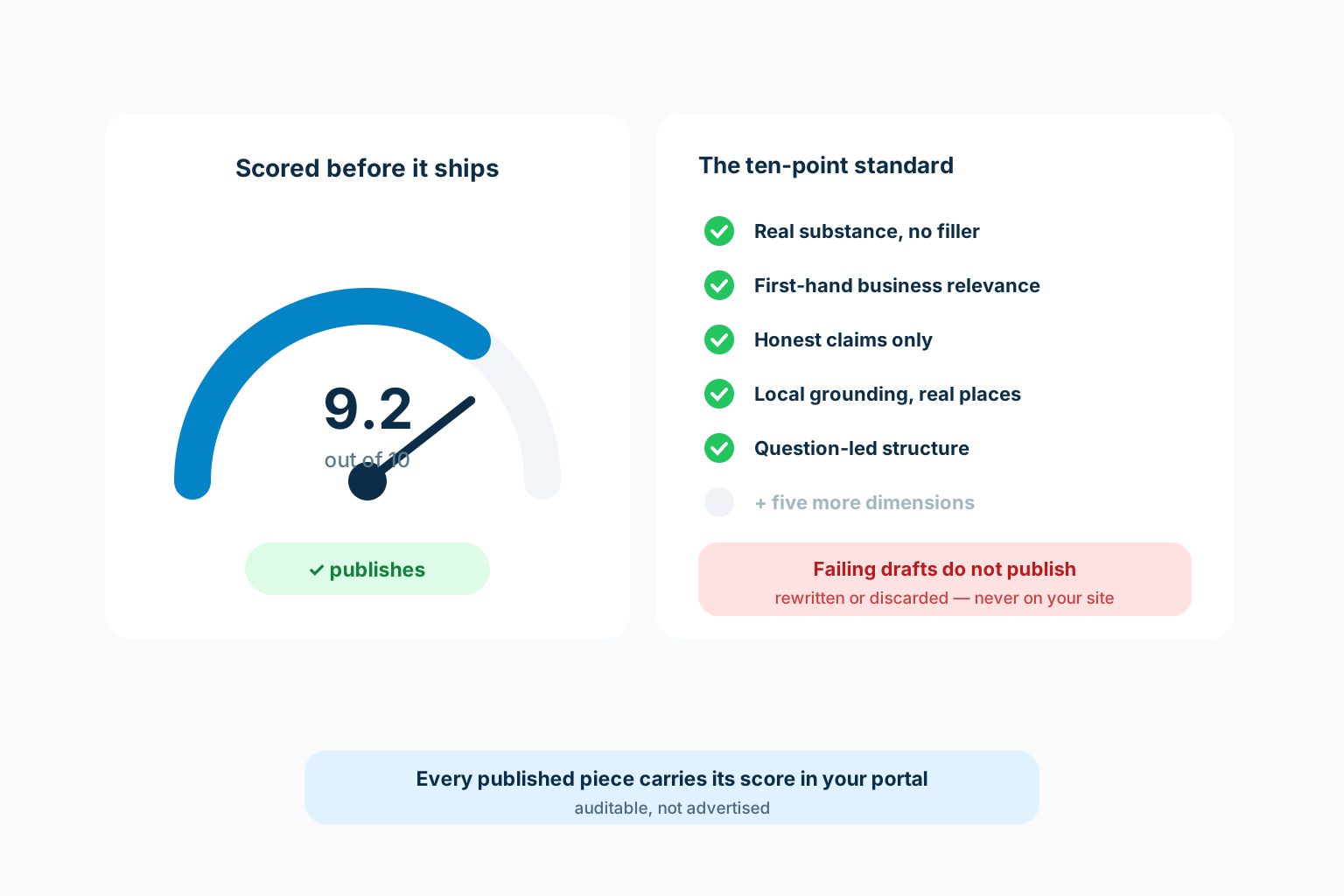
Blog posts, landing pages, and profile posts are scored against the ClawSignal Content Standards — a ten-point bar covering substance, relevance, structure, and local grounding.
Failing drafts do not ship
A draft under the bar routes to manual review with its failing dimensions listed. It gets rewritten or discarded — your site never sees it.
Scores stay on the record
Each published piece carries its score in your portal, so the gate is auditable history, not a marketing claim.
Content roulette
- AI tools that publish whatever comes out of the model
- Thin volume that triggers scaled-content demotion
- Quality judged by whoever glances at it, whenever
- No record of what standard anything met
With Content Quality Scoring
- A ten-point gate every piece must pass before publishing
- Failing drafts caught and rewritten — automatically enforced
- Scores logged per piece, auditable in your portal
- The reason our automation survives Google’s spam policies
What you get
- A 10-point rubric: substance, structure, length, internal links, schema, honesty
- Content that fails the gate is rewritten or discarded — never shipped
- Score history stored, so quality is auditable over time
- The same gate applies to our own site’s content
How it works
Each draft is scored by rubric before publishing. Passing content ships with its score on record; failing content goes back for rework. The gate is enforced in the pipeline itself, not by good intentions.
The rubric includes honesty checks — no invented statistics, no fabricated claims. Content is marketing; it still has to be true.
What the ten points actually check
The dimensions are the ones Google’s guidance and the assistants’ citation behavior both reward: real substance over filler, first-hand relevance to the actual business, honest claims, clean structure with question-led headings, local grounding that names real places, internal links that help, metadata that matches, and length that serves the topic rather than a quota.
The bar is calibrated against our own history — we watched a thin-content phase drag index rates down, recalibrated the gate until it rejected exactly that class of draft, and kept the receipts. The gate is strict because we paid for the lesson.
Why a failing draft is good news
Every rejected draft is a demotion that did not happen. Scaled-content penalties do not stay on the offending page — they bleed across a domain and take good pages down too. A gate that occasionally delays a post is cheap insurance against a quarter of recovery work.
And the discipline compounds: publishing only above-bar work teaches the index to trust the domain, which lifts everything already published. Quality gating is the rare feature whose main benefit lands on pages it never touched.
Where the standard came from
The ClawSignal Content Standards started as a written document, not a slogan: ten dimensions with definitions, examples, and scoring rules, aligned to Google’s published content guidance and then calibrated the expensive way — against our own site’s indexing history. When the index punished a class of draft, the rubric was tightened until it caught that class first.
It is versioned and enforced in code, which is the part that keeps it real: a standard that lives in a PDF drifts with whoever is tired that week. Ours fails builds. The same gate that scores customer content scored the page you are reading.
A number the content must beat
Ten checks — depth, structure, local grounding, internal links, schema, honesty among them — roll into one score, and publishing is blocked below the threshold. The gate is the reason "automated" never has to mean "thin."
- Ten-point standard, hard publish gate
- Every score stored with its breakdown
- Same bar for our content and yours
Illustrative layout — decorative shapes, not data. Your real numbers come from your scans, stored verbatim in your portal.
See why, not just what
Each scored piece shows which checks passed and which failed, so a low score is a repair list rather than a mystery. Failed drafts loop back through rewrite before they ever reach your site.
- Failures become rewrite instructions
- Rescored after every revision
- Quality trend across all your content
Illustrative layout — decorative shapes, not data. Your real numbers come from your scans, stored verbatim in your portal.
Content Quality Scoring FAQ
How do you measure content quality objectively?
With a fixed rubric applied to every piece: substance, structure, length floors, internal linking, schema, meta quality, and honesty checks. ClawSignal scores each draft against the same 10 points and keeps the score on record.
Why does content quality matter more than volume now?
Google’s helpful-content systems demote thin mass-produced pages sitewide — bad content damages good pages. A hard gate means volume never comes at quality’s expense.
What content goes through the quality gate?
Eligible blog, landing-page and Google Business Profile drafts all receive a versioned scorecard before anything publishes.
Who decides the quality standard?
The ClawSignal Content Standards document — a fixed ten-point rubric aligned with Google’s content guidance and calibrated against our own indexing history. It is versioned and enforced in code, so the standard cannot quietly drift with anyone’s mood.
Can I see the score for a specific post?
Yes — every published piece carries its score and scoring breakdown in your portal, next to the piece itself. The gate is meant to be audited: if you ever think a post should not have passed, the dimensions that passed it are right there to argue with.
Does the gate slow content down?
Occasionally, deliberately: a failing draft is rewritten or held instead of published. Plan allowances never override the evidence gate.
More features
Put Content Quality Scoring to work
Start with a free scan. ClawSignal finds the strongest opportunity, prepares the work, and keeps every change behind your approval.