Quality-gated drafts with governed publication
Content starts from measured need and remains a draft until its source, quality, canary, verification, and rollback evidence is complete.
Free AI-visibility scan · No credit card · Cancel anytime
Set up in 3 simple steps
Topics come from demand
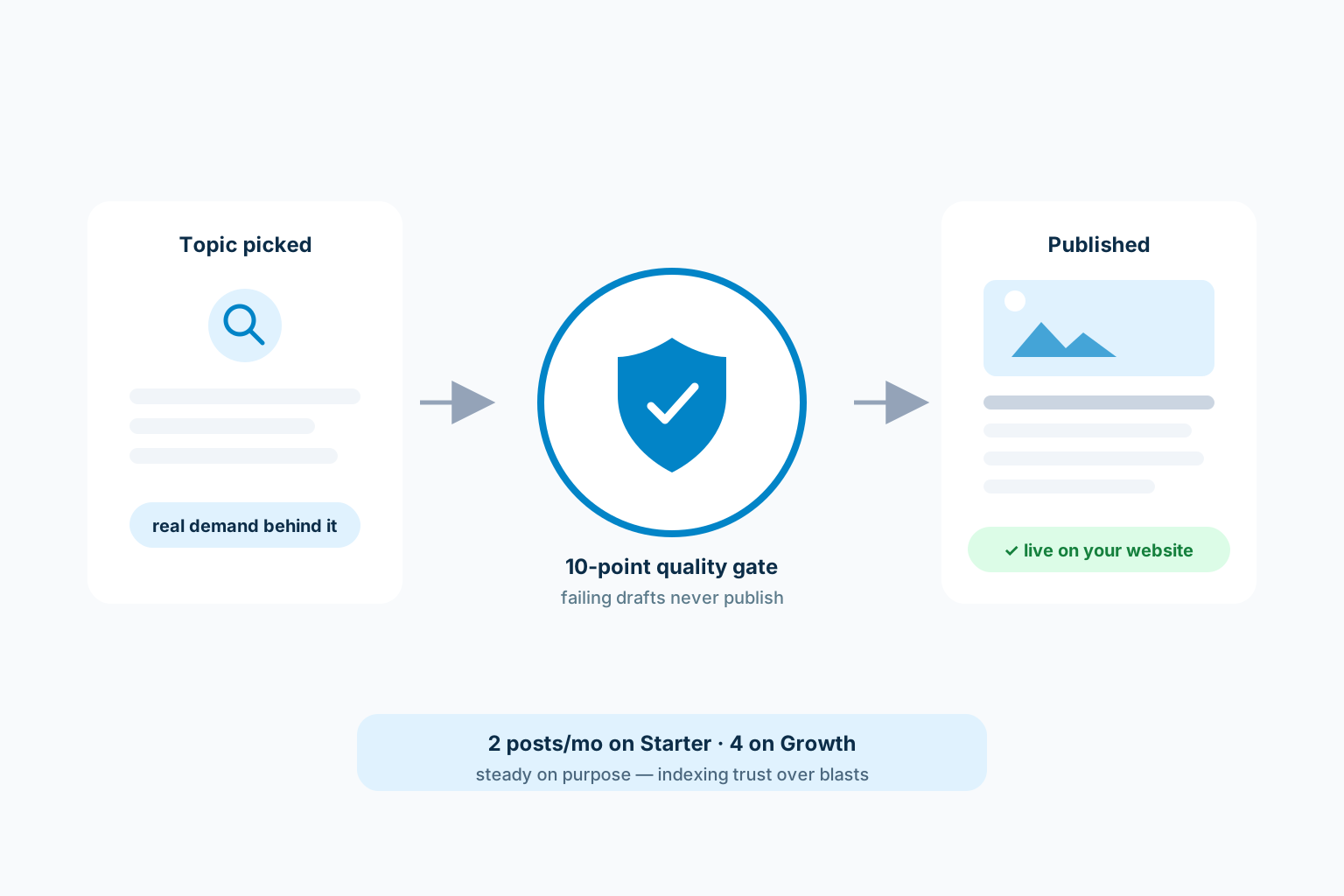
Every post starts as a demand-checked keyword with real volume or AI ask-rates — never a generic calendar filler.
The draft must pass the gate
Each post is scored against the ClawSignal Content Standards — a ten-point quality bar. A failing draft goes to review, never to your site.
Publishing is automatic where possible
Posts publish straight to WordPress, Ghost, and other supported platforms; closed platforms get paste-ready copy. Starter ships 2 posts a month, Growth 4.
The blog nobody writes
- The last post is from two years ago and greets every visitor
- Assistants and Google find nothing new to cite
- Content agencies quote retainers; AI tools hand you homework
- Volume tools exist — and volume without quality gets demoted
With Blog Automation
- A steady cadence of demand-picked, quality-gated posts
- Eligible publication is governed and evidenced on supported platforms
- Every post carries schema and internal links where the platform allows
- Deliberately steady volume — indexing trust over content blasts
What you get
- Posts written against your services, area, and real keyword targets
- A hard 10-point content-standards gate — length, structure, links, schema, honesty
- Governed publication on eligible supported adapters after release gates pass
- Closed website builders get ready-to-paste drafts — never a lockout
How it works
The engine drafts against measured topics, scores each draft, validates its links and claims, and submits eligible work to the governed publication path. Failed evidence is recorded and blocks publication.
A quality score is not a ranking promise. Search and assistant outcomes are observed after application and reported separately.
The gate is the product
Automated content needs an inspectable quality bar. Substance, first-hand relevance, structure, claim support, and local grounding are scored before a draft becomes eligible for publication.
Cadence is controlled by the current plan and corpus need. It does not override source, quality, canary, verification, or rollback gates, and no score is presented as a ranking guarantee.
Written for two readers
Every post serves the human who searches and the assistant that answers. Question-led structure, real specifics, and local grounding give assistants something citable, while the same qualities are what Google’s helpful-content systems reward — one discipline, two channels.
Supported platform adapters can receive governed publication actions; closed builders get clean paste-ready copy. Your portal keeps the draft, decision, application, and verification states separate.
What ships inside every post
A post is more than its paragraphs: article and breadcrumb schema ride along where the platform allows, internal links stitch it into your existing pages, the meta title and description are written to the same demand data as the topic, and any featured image is photorealistic and generated from the post’s own buying-intent keyword — never a stock-photo shrug, never an AI-looking graphic.
The checklist is enforced in code and evaluated separately from later search and assistant outcomes. That keeps the quality claim inspectable without pretending the checklist controls indexing.
Nothing publishes below the bar
Every draft is scored against a ten-point quality standard before it can ship — length, structure, local grounding, links, schema, honesty. Drafts that miss the bar get rewritten or die in the queue. Your site never pays for filler.
- A hard quality gate before every publish
- Scores recorded per post, auditable
- Built from your services and your city
Illustrative layout — decorative shapes, not data. Your real numbers come from your scans, stored verbatim in your portal.
A cadence you never have to push
Posts are planned from measured queries, written, scored, and held for governed publication. The portal shows what is draft, approved, applied, or verified.
- Scheduled cadence, hands-off
- Each post targets a demand-picked keyword
- Internal links and CTAs built in
Illustrative layout — decorative shapes, not data. Your real numbers come from your scans, stored verbatim in your portal.
Blog Automation FAQ
Does automated blog content actually rank?
No content system can guarantee rankings. ClawSignal measures quality, retrieval, Google Search Console outcomes, and assistant citations as separate evidence. Drafts that fail source or quality gates remain unpublished.
Which platforms can blog posts publish to automatically?
WordPress, Ghost, Webflow, Shopify, Wix, and any site behind a custom webhook. Closed builders — like GoDaddy sites — get the finished post ready to paste, so no platform locks you out.
How many blog posts are included?
The current plan allowance appears in pricing and the portal. An allowance is a ceiling for governed work, not a promise that unsupported or low-quality topics will be published.
What happens if a draft fails the quality gate?
It does not publish — the draft routes to manual review with its failing dimensions listed, gets rewritten or discarded, and only a passing version reaches your site. A late post beats a thin one, every time.
Do the posts sound like AI wrote them?
Substance, first-hand relevance, source support, and local grounding are scored dimensions. Blinded human review and later observed outcomes are measured separately from the internal score.
More features
Put Blog Automation to work
Start with a free scan. ClawSignal finds the strongest opportunity, prepares the work, and keeps every change behind your approval.