The same questions, scored against your competitors
It is not enough to know your own numbers — visibility is a race. Competitors Gap tracks the businesses that show up where you want to, across both Google and the AI assistants.
Free AI-visibility scan · No credit card · Cancel anytime
Set up in 3 simple steps
Name the rivals that matter
Growth tracks up to five competitors — the businesses actually winning the customers you want, not a random directory of your industry.
We score the same questions against them
The same AI-assistant questions and keyword checks that measure you run against them: who gets named, who ranks, and for what.
The gap becomes a work list
Keyword overlap, share of tracked clicks and value, and where they are visible and you are not — read as priorities, not trivia.
Competing in the dark
- You know who your rivals are, but not which questions they win
- Their AI-assistant mentions are invisible to you
- Their content and citation moves surface only when customers vanish
- Strategy runs on anecdotes from lost jobs
With Competitors Gap
- The exact questions where a named rival beats you, listed
- Their AI share of voice measured next to yours
- Estimated value of the traffic they hold that you could contest
- The monthly work aimed where the gap is narrowest to close
What you get
- Keyword overlap: where you and each competitor compete head-to-head
- Estimated traffic value of the gap between you
- Which competitors the AI assistants cite alongside you — or instead of you
- Share-of-clicks and share-of-value, side by side
How it works
We track your named competitors’ keyword footprints and cross-reference every AI answer we collect for your questions. The portal shows who is winning each answer and what the gap is worth.
Competitor names come from real scan answers and real ranking data — never invented. If the assistants have not named specific competitors yet, the portal says exactly that.
A gap is only useful when it is specific
"They rank better than us" is a mood; "they are named by two assistants for the three highest-value questions in Hillcrest and we are named by none" is a plan. The dashboard keeps everything at that second level — per question, per assistant, per keyword, with honest labels for what has not been measured yet.
The share views stay honest too: donuts compare share of tracked clicks and value AMONG the competitors you track — labeled exactly that way, never dressed up as market share. Point-in-time data reads as point-in-time; we do not draw trend lines the data cannot support.
From gap to gain
Closing a specific gap uses ordinary levers pointed precisely: content that answers the exact question a rival wins, profile activity in the neighborhood they dominate, citations that match their coverage. Precision is the whole advantage — the same monthly work, aimed instead of scattered.
Then the next scans re-score both sides. Some gaps close in a cycle; entrenched ones narrow over quarters. Either way you watch the same numbers we do — no interpretive reporting layer between you and the measurement.
Five competitors is a choice, not a ceiling on insight
Tracking five rivals well beats tracking twenty badly: each tracked competitor costs real scan questions and real ranking checks every cycle, and diluting those across a long tail buys noise. The right five are usually obvious once you ask the honest question — who actually took the last ten customers you lost?
The set is editable as your market shifts: a new aggressive entrant swaps in, a faded rival swaps out. The history stays, so even a swapped-out competitor’s record remains in your portal for the quarters it was tracked — useful the day they come back swinging and you want to know what worked against them last time.
Measure the gap — do not guess it
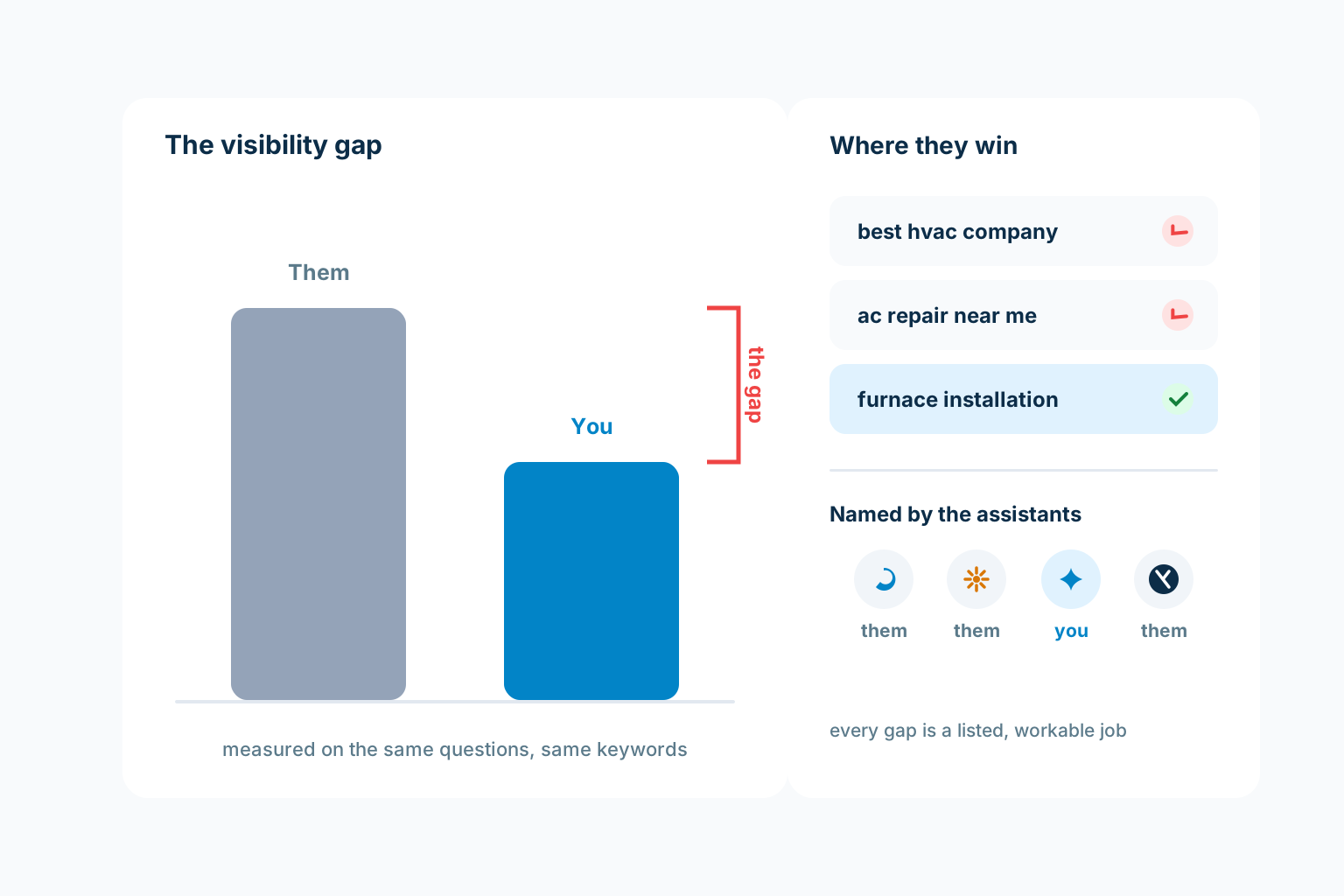
When an assistant or a results page picks someone else, that is a measurable event. The gap view lines your visibility up against the competitors who actually take your spot, per question and per assistant, so the gap has a name attached.
- The competitors named instead, listed
- Side-by-side share, per assistant
- Backed by stored answers, not vibes
Illustrative layout — decorative shapes, not data. Your real numbers come from your scans, stored verbatim in your portal.
Their wins become your work list
Every place a competitor beats you is a to-do with evidence behind it: the question, the answer, the gap. That queue is what your monthly plan works through — and the next scan shows which items stopped being gaps.
- Gaps convert into scheduled work
- Rechecked every cycle
- Closed gaps are marked, honestly
Illustrative layout — decorative shapes, not data. Your real numbers come from your scans, stored verbatim in your portal.
Competitors Gap FAQ
What should an SEO competitor analysis tool actually show?
Three things: where you overlap (the keywords you both chase), what the gap is worth (traffic value, not vanity counts), and — new in the AI era — who the AI assistants recommend when your customers ask. ClawSignal tracks all three.
How do I find out which competitors AI recommends instead of me?
Ask the assistants the questions your customers ask and log every named business. ClawSignal does this on a schedule across ChatGPT, Claude, Gemini, and Grok and shows the names, frequencies, and trend in your portal.
How many competitors can I track?
Growth tracks up to five competitors with the full gap analysis — AI share of voice, keyword overlap, and estimated traffic value. Starter does not include competitor tracking; the honest move at that tier is nailing your own baseline first.
Where does the competitor data come from?
The same instruments that measure you: real AI-assistant answers where rivals get named, real ranking checks on shared keywords, and live demand data for the terms — never scraped guesses or bought lists.
Will my competitors know I am tracking them?
No — everything measured is public-surface data: the answers assistants give anyone who asks, the rankings any searcher sees, the demand numbers any tool can price. There is no contact, no crawling of their private systems, and nothing for them to detect. You are simply reading the same scoreboard they are, systematically.
More features
Put Competitors Gap to work
Start with a free scan. ClawSignal finds the strongest opportunity, prepares the work, and keeps every change behind your approval.