Google Search Console, watched weekly — so nothing rots quietly
Indexing problems are silent killers: pages drop out, sitemaps go stale, and traffic decays before anyone notices. We watch it continuously and act on what changes.
Free AI-visibility scan · No credit card · Cancel anytime
Set up in 3 simple steps
Sitemaps stay submitted
Your sitemap goes to Google Search Console weekly, so new and updated pages are always on the crawler’s list.
Index coverage gets watched
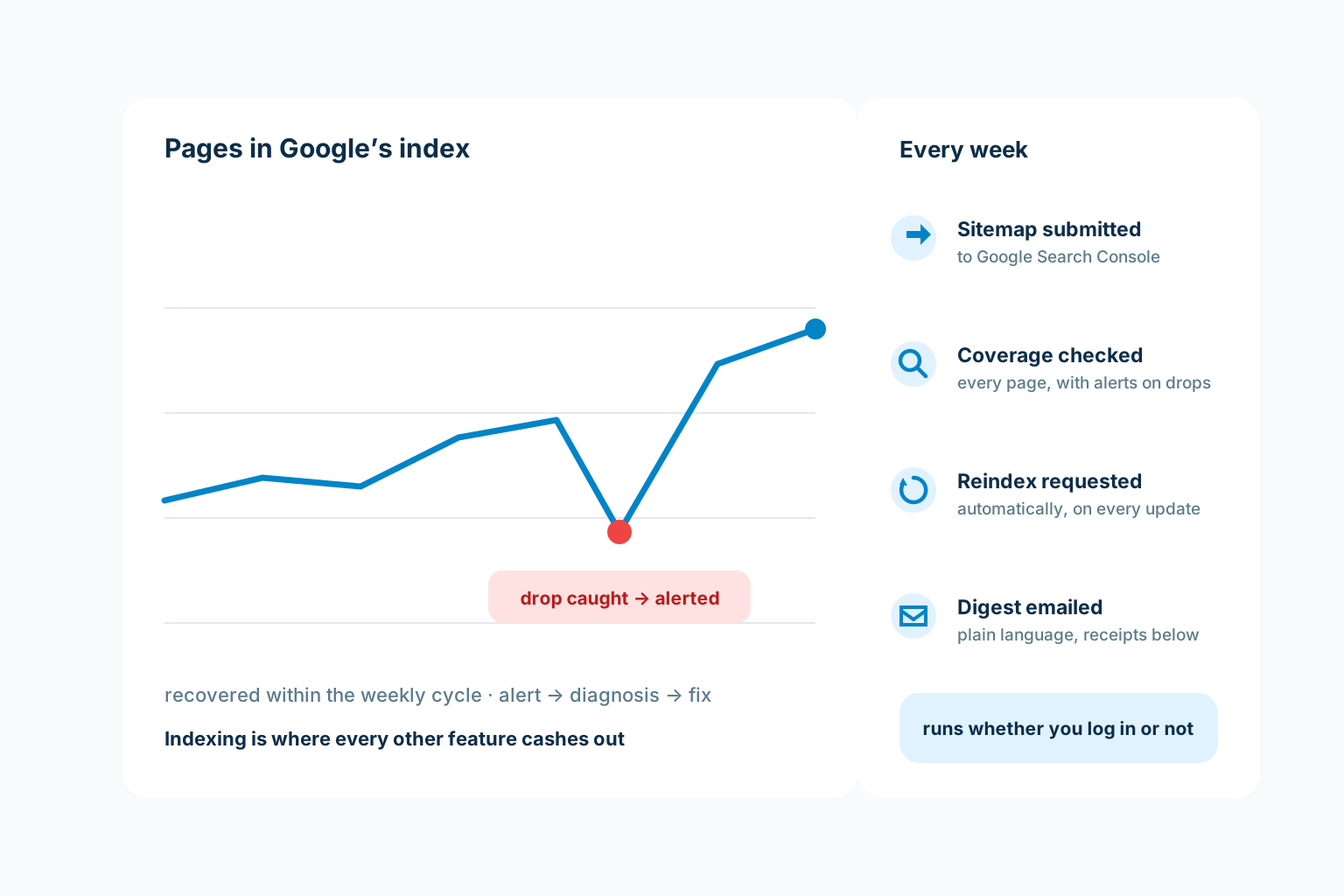
Weekly coverage checks catch pages dropping out of the index — with alerts on drops, because silent de-indexing is how visibility bleeds.
Indexing signals refresh on update
When content changes, ClawSignal inspects the URL, resubmits the verified property’s sitemap, records Google’s current state, and checks again later. Google alone decides whether and when a page is indexed.
Publishing into the void
- New pages sit unindexed for weeks and nobody notices
- A de-indexing event surfaces months later as a traffic mystery
- Updates wait for the crawler’s mood to reach the index
- Search Console exists — unopened
With Search Performance Monitoring
- Weekly sitemap submission keeps the crawler current
- Coverage drops trigger alerts the week they happen
- URL inspection and sitemap refresh on every content update
- The weekly digest says what happened in plain language
What you get
- Index coverage checked weekly, page by page
- Impressions and clicks tracked daily from Search Console
- Sitemaps submitted and re-submitted automatically
- Changed URLs inspected, sitemap refreshed, and checked again later
How it works
Your Search Console connects once; from there the monitoring runs on schedule — coverage sweeps, performance pulls, sitemap health, URL inspection, and scheduled rechecks when content changes. Problems surface in your portal instead of six months later.
We report the numbers Search Console reports — including the bad weeks. Honest trend lines are the only kind worth having.
Indexing is the plumbing everything else depends on
Content that is not indexed does not exist — not to Google, and not to the assistants that lean on search infrastructure to know what is current. Every other feature on this site ultimately drains through this one: posts, landing pages, and fixes only pay off once the index has them.
That is why the monitoring is unglamorous and weekly: inspection, sitemap submission, coverage, and alerts. It is the difference between publishing work and knowing whether Google can find it.
What an alert actually triggers
A coverage drop is a symptom with a short list of causes — a noindex slipped into a template, a canonical pointing away, a server hiccup during crawl, or quality demotion. The alert starts a diagnosis, and the fix rides the same monthly machinery: on-page corrections applied where the platform allows, paste-ready where it does not.
Our own site runs the same monitoring, and it has taught us respect for the failure mode: indexing problems compound quietly. Catching them in week one instead of quarter two is most of the value.
The weekly digest, in plain language
Once a week you get the summary a busy owner can actually read: what the sitemap submitted, what Google currently reports, what dropped and why it matters, and which URLs are waiting for a later recheck. No dashboard spelunking, no jargon decoder ring — the digest is the week’s monitoring translated into plain language.
The detail stays available underneath: the portal keeps the per-page coverage record for anyone who wants to drill from a sentence to the evidence. Plain language on top, receipts below — the same honesty pattern as everything else in the service, applied to the one system that decides whether any of the rest gets seen at all.
Drops get caught, not discovered
Clicks, impressions, and index coverage watched weekly from your own Search Console data. When something dips — a deindexed page, a lost ranking, a crawl problem — it is flagged while it is still small, with the cause attached.
- Your real Search Console data, weekly
- Dips flagged with the likely cause
- History kept, so incidents have context
Illustrative layout — decorative shapes, not data. Your real numbers come from your scans, stored verbatim in your portal.
Monitoring that ends in action
A flagged drop routes into the same pipeline as everything else: on-page fixes ship where they can, and anything needing your platform arrives paste-ready. The weekly rhythm means nothing compounds silently for a quarter.
- Findings route into the fix pipeline
- Weekly rhythm, never a surprise audit
- Prioritized by traffic at stake
Illustrative layout — decorative shapes, not data. Your real numbers come from your scans, stored verbatim in your portal.
Search Performance Monitoring FAQ
Why do indexed pages quietly drop out of Google?
Quality reassessments, crawl issues, redirects, and stale sitemaps. Most owners find out months later when traffic is already gone. Weekly index-coverage checks catch the drop the week it happens.
What is a website indexing checker?
A tool that verifies which pages Google currently reports as indexed, excluded, or unknown. ClawSignal checks coverage through Search Console, inspects changed URLs, refreshes the verified sitemap, and rechecks later.
What exactly is monitored each week?
Sitemap submission to Google Search Console, URL inspection, index coverage with alerts on drops, and scheduled rechecks after content updates — plus the weekly performance digest that summarizes it in plain language.
Why would a page fall out of Google’s index?
Common causes: a stray noindex tag, a canonical pointing elsewhere, crawl errors, or quality demotion. The monitoring catches the drop within the weekly cycle; the diagnosis and fix then run through the same on-page machinery that maintains your site.
Do I need Google Search Console set up for this to work?
The onboarding handles the connection with you once, and from then on sitemap submissions, URL inspections, coverage checks, and scheduled rechecks run against your verified Search Console property. You keep full ownership of the property — we operate through it, never around it.
How fast do new pages get indexed with monitoring in place?
Honestly: Google decides whether and when a page is indexed. ClawSignal verifies the connected property, inspects the URL, refreshes the sitemap when content changes, records the response, and checks again later. That closes the operational loop without promising a result Google does not guarantee.
More features
Put Search Performance Monitoring to work
Start with a free scan. ClawSignal finds the strongest opportunity, prepares the work, and keeps every change behind your approval.