Real demand numbers — including how often people ask AI
Every keyword decision starts with real data: live search volume, difficulty, and cost-per-click — plus something almost nobody shows you: how often people ask AI assistants the same question.
Free AI-visibility scan · No credit card · Cancel anytime
Set up in 3 simple steps
Ask about any term
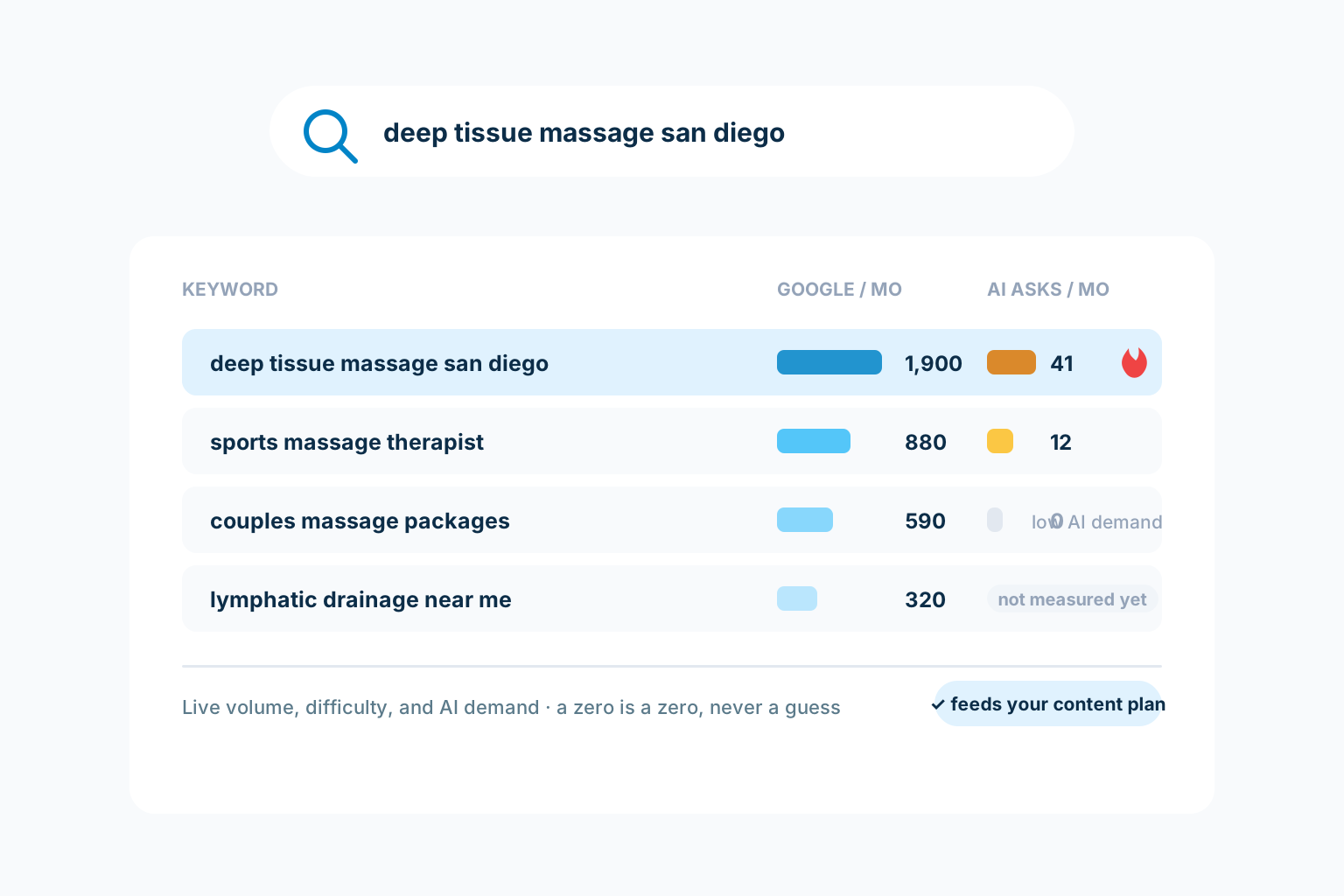
Type a keyword in your portal and get live numbers — search volume, difficulty, cost-per-click, and AI demand. Starter includes 4 searches a month, Growth 8.
See the demand that matters now
AI demand shows how often assistants get asked about the term — a number most tools do not have, measured, with "not measured yet" shown honestly when it is not.
The findings drive the work
Winning terms feed your tracked set and your content plan — our workers run the same research when planning every post and landing page.
Choosing keywords by gut
- Content written for phrases nobody actually searches
- High-competition terms chased because they sound right
- AI-assistant demand invisible — a whole channel unpriced
- Research tools subscriptions that expire unopened
With Keyword Research
- Live volume, difficulty, and cost data before any word gets written
- AI demand measured per term — the number others do not show
- Zero-demand candidates dropped before they waste a content slot
- Research built into the service, not sold as homework
What you get
- Live search volume, difficulty, and CPC from real market data
- AI demand per question — measured monthly, shown honestly
- High-buying-intent suggestions, not generic head terms
- A research box in your portal: look up any term on demand
How it works
We pull live metrics for your tracked set and candidates, then rank suggestions by buying intent — the searches made by people close to a purchase decision. AI demand is measured against the assistants’ own query data and refreshed monthly.
Unknowns say "not measured yet," never zero. A question nobody asks AI today reads "low AI demand" — because that is the truth, and it can change.
The AI-demand column changes the math
Classic research prices a keyword by Google volume alone. But a growing slice of buying questions now goes straight to assistants — and a term with modest Google volume can carry real AI ask-rates, or none at all. We price both columns with live data, so a keyword earns its content slot on the full demand picture.
Honesty applies to the numbers themselves: a measured zero reads "low AI demand," an unmeasured term reads "not measured yet," and nothing is ever interpolated to look complete. In a young channel, knowing what is NOT known is half the edge.
Research you use versus research you own
The portal search box is yours: 4 lookups a month on Starter, 8 on Growth, each drawing the same live sources our workers use. But the deeper value is that the discipline runs without you — every blog post, landing page, and tracked keyword in your plan was demand-checked before it existed.
That is the practical difference from research-suite subscriptions: there, the data waits for your hours; here, the data is a gate the work must pass through whether you log in or not.
From lookup to plan
A good research hit should not die in a spreadsheet. When a lookup surfaces a term worth owning, it has three natural exits: into your tracked set (so movement gets measured), into the content plan (so a post or landing page answers it), or into the profile work (so the term shows up where local signals live). The portal makes each exit one click.
Terms that fail the numbers die honestly — the search history keeps them with their data, so nobody re-litigates a dead keyword next quarter. Research that remembers its own conclusions is most of what discipline means.
Pick keywords by demand, not by feel
Every candidate keyword comes back with its real search volume, so "emergency plumber near me" and "plumbing tips" stop looking equally good. You spend your content and tracking slots on the terms buyers actually type.
- Real monthly volume on every candidate
- Buying-intent terms surfaced first
- One click to start tracking a winner
Illustrative layout — decorative shapes, not data. Your real numbers come from your scans, stored verbatim in your portal.
Catch demand as it moves
Search demand is seasonal and shifting — the research view keeps volume current so the keyword set you track this quarter still matches what customers ask this quarter. Stale keyword lists quietly waste every downstream effort.
- Volume refreshed, not frozen at signup
- AI-asked volume shown honestly where measured
- Feeds the blog engine and the rank tracker
Illustrative layout — decorative shapes, not data. Your real numbers come from your scans, stored verbatim in your portal.
Keyword Research FAQ
What makes a good local keyword research tool?
Real numbers over estimates, buying intent over head terms, and honesty about unknowns. ClawSignal pulls live volume, difficulty, and CPC, ranks suggestions by purchase intent, and shows AI demand next to every question.
What is AI keyword demand and why should I care?
It is how often people ask AI assistants a question, as opposed to Googling it. Some searches have huge Google volume and near-zero AI volume — knowing which is which tells you where each question actually gets answered.
How many keyword searches do I get per month?
Starter includes 4 client-run searches a month and Growth includes 8, shown as "X of Y used" in your portal. Our workers run their own research on top when planning your content — those do not count against your allowance.
What is AI demand and why does it matter?
How often AI assistants get asked about a term — measured, not modeled. It prices the channel where a growing share of buying questions now happen; a keyword with real AI asks deserves content shaped as an answer, and one with zero deserves honesty about that.
Is the research data live or from a stale database?
Live — each lookup queries current volume, difficulty, cost-per-click, and AI-demand sources at the moment you run it, and the result is stamped with when it was measured. Stale research is how businesses end up optimizing for last year’s market.
More features
Put Keyword Research to work
Start with a free scan. ClawSignal finds the strongest opportunity, prepares the work, and keeps every change behind your approval.