Every tracked keyword’s Google position, checked with real searches
No estimates, no scraped averages — real search-result checks for every keyword you track, with movement history you can act on.
Free AI-visibility scan · No credit card · Cancel anytime
Set up in 3 simple steps
Pick the terms that pay
Your tracked set starts from real demand data — the searches with volume and buying intent in your market, not vanity phrases. Starter tracks 10 keywords; Growth tracks 25.
We check real results on schedule
Every cycle runs real Google result checks for each tracked term — actual positions from actual searches, recorded with history.
You watch movement, honestly
Positions chart over time in your portal. A keyword that is not ranking yet says so plainly — never a placeholder number, never a fake zero.
Guessing at rankings
- You search yourself and hope incognito mode tells the truth
- Movement gets noticed weeks late, if at all
- No history — you cannot tell a dip from a trend
- The terms tracked are whatever came to mind, not what buyers search
With Keyword Rank Tracking
- Scheduled, real result checks for every tracked term
- Position history charts a trend you can read at a glance
- Demand-picked terms — volume and intent verified before tracking
- The same subscription ships the work that moves the positions
What you get
- Weekly position checks against live Google results
- Movement history per keyword — see what the work is doing
- Tracked sets tuned to buying intent, not vanity head terms
- Honest nulls: a keyword that is not ranking yet says so
How it works
Your tracked set is checked on a weekly cycle. Each check is a real query against live results; positions and changes are stored so your portal shows the trend, not a snapshot.
This tracks your Google positions. Whether AI assistants recommend you is a different question — that is the AI Visibility Tracker.
Why self-searching lies to you
Searching for yourself is the most common rank check and the least reliable: Google personalizes by your history, your location down to the block, and the device in your hand. The position you see is yours alone — your customers across town see a different page entirely. Scheduled neutral checks exist to remove exactly that distortion.
The second lie is recency: one look on a good day becomes "we rank fourth." Positions breathe — they shift with competitors’ activity, reviews, and index updates. A single reading is weather; the tracked history is climate, and business decisions belong on climate.
How the tracked set stays honest
Every keyword earns its slot with data: real search volume, difficulty, and buying intent from live sources — the same demand discipline that drives our content engine. Tracking a phrase nobody searches flatters the chart and wastes the slot; the portal shows the demand number next to each term so you can see why it is there.
And when a tracked term is not ranking, the chart says exactly that. No placeholder positions, no "estimated" numbers — a gap on the chart is information, and filling it honestly is what the monthly work is for.
What we track for you from day one
Onboarding curates your starter set from your services, your service area, and live demand data — the terms buyers in your market actually use, not a template list from someone else’s industry. Each slot is spent where volume, intent, and winnability intersect, and you can see the demand reasoning next to every term in the portal.
The set stays connected to everything else: tracked terms feed the Visibility Map’s block-by-block checks, shape the questions the AI scans ask, and set targets for the month’s content. One curated list drives all three scoreboards, which is why curating it well matters more than tracking more of it.
Every keyword, its real position
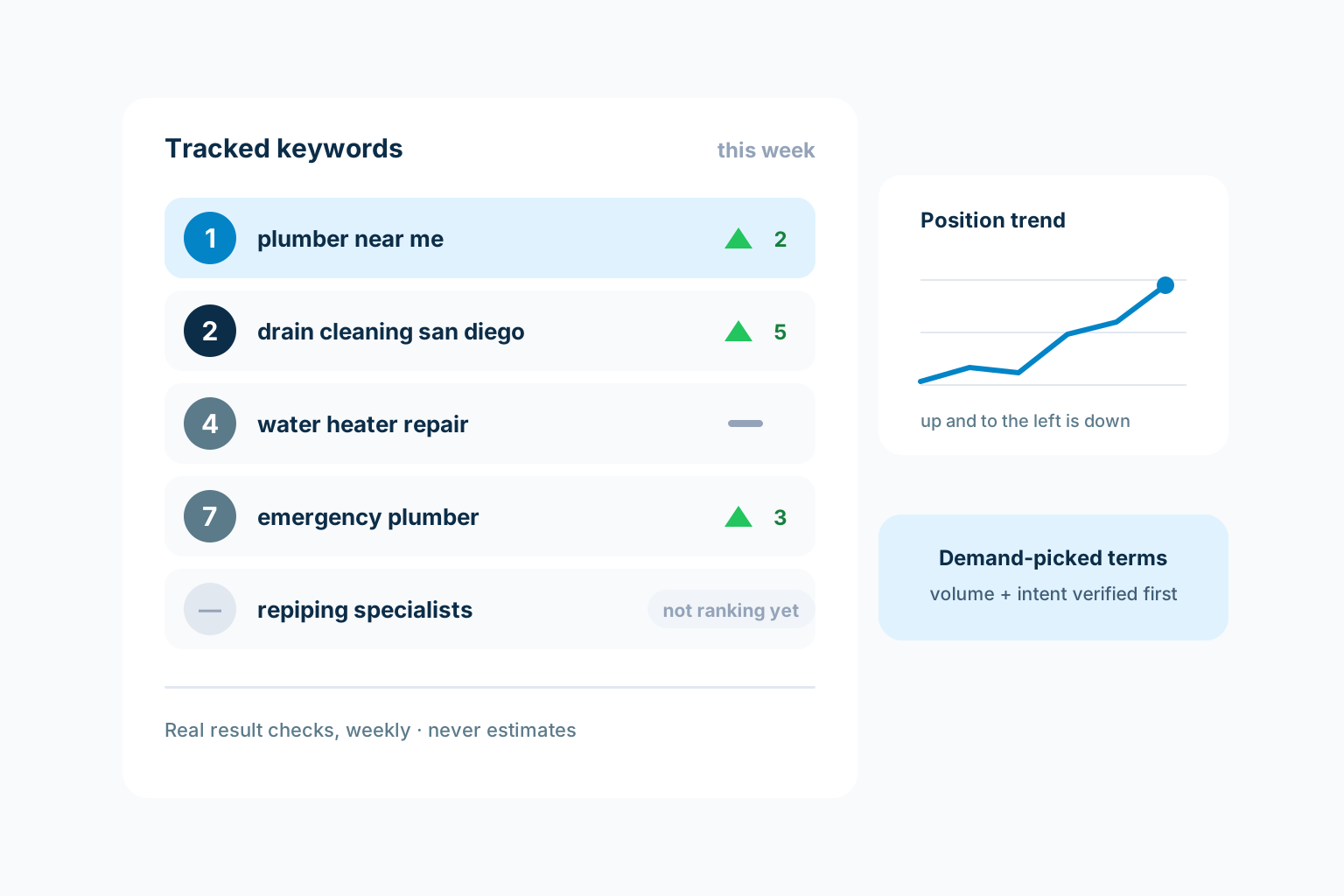
The keywords you chose — the ones buyers type right before they call — checked on a schedule and listed with the spot each one actually holds. Movement is marked in both directions, drops included, because you cannot fix what gets hidden.
- Positions from real checks, never estimates
- Up, down, and newly ranked — marked honestly
- Every cycle kept, so the history is auditable
Illustrative layout — decorative shapes, not data. Your real numbers come from your scans, stored verbatim in your portal.
Read the trend, not one lucky day
Single readings bounce. Because every cycle is stored, each keyword becomes a line you can actually read — and when the monthly SEO work ships, the next checks tell you whether it moved anything.
- Checked on a schedule, every cycle
- A trend line, not a one-off screenshot
- Paired with the SEO work that moves it
Illustrative layout — decorative shapes, not data. Your real numbers come from your scans, stored verbatim in your portal.
Keyword Rank Tracking FAQ
What is the most accurate keyword rank tracker?
One that runs real searches instead of modeled estimates. ClawSignal checks each tracked keyword against live Google results on a weekly cycle and stores the movement history — a keyword that is not ranking yet says so.
How is a keyword position tracker different from Search Console?
Search Console shows averages for queries Google chooses to report. A keyword position tracker checks the exact keywords you care about, on a schedule, so you can tie movement to the work that caused it.
How often are keyword positions checked?
Weekly, per tracked keyword — real Google result checks recorded with history, not estimates. Starter includes 10 tracked keywords and Growth includes 25, with extra tracked keywords available at $2/mo each.
Why does my own Google search show a different position?
Personalization: Google adjusts results by your search history, precise location, and device. Your customers see different pages than you do — which is exactly why scheduled neutral checks, not self-searches, are the measurement standard.
Can I change which keywords are tracked?
Yes — swap terms in your portal as your services or seasons shift. Each candidate shows its live demand data before it takes a slot, and the history of a swapped-out term stays on record, so the chart never loses the story of what was tried.
Do rankings and AI visibility move together?
Often, but not in lockstep — assistants weigh reviews, profiles, and coverage alongside the classic ranking signals, so a business can climb one scoreboard before the other. Tracking both in one portal is what lets you see which channel is responding to the month’s work first.
More features
Put Keyword Rank Tracking to work
Start with a free scan. ClawSignal finds the strongest opportunity, prepares the work, and keeps every change behind your approval.